

In the world of personal fragrance, two titans stand apart: adaptive fragrance and solid perfume. Each offers a distinct relationship with time, skin, and circumstance, much like the difference between a river that bends to the landscape and a mountain that stands resolute against the wind. One flows with the wearer’s environment, shifting subtly with temperature and mood, while the other remains steadfast, a silent guardian of scent that endures through heat, cold, and motion. To understand their unique appeal is to appreciate not just how long a fragrance lasts, but how it lives with the wearer.
The Nature of Adaptive Fragrance: A Scent That Breathes With You
Adaptive fragrance is the olfactory equivalent of a living organism. Composed of volatile molecules that respond dynamically to the body’s chemistry and external conditions, it evolves throughout the day like a slow-motion dance between wearer and environment. When applied, its top notes—often citrusy or herbal—burst forth with immediacy, like the first light of dawn. But as the hours pass, the heart notes emerge, softening into something warmer, more intimate, much like the transition from morning coffee to evening tea.
This metamorphosis is not arbitrary. The skin’s natural oils and pH interact with the fragrance’s ingredients, altering their release. Heat accelerates evaporation, while cooler temperatures slow it down. A spritz of an adaptive fragrance on a summer evening may bloom into a rich floral bouquet, while the same scent worn on a winter morning might settle into a delicate, powdery whisper. It is a fragrance that refuses to be pinned down—one that grows more personal with every passing hour.
Consider the modern traveler, stepping from a sunlit plaza into an air-conditioned gallery. The fragrance they wear doesn’t just persist; it adapts. It softens in the chill, intensifies in the warmth, and lingers just long enough to be noticed—not overpowering, but present, like a familiar voice in a crowded room. This is the magic of adaptive fragrance: it doesn’t just last; it engages.
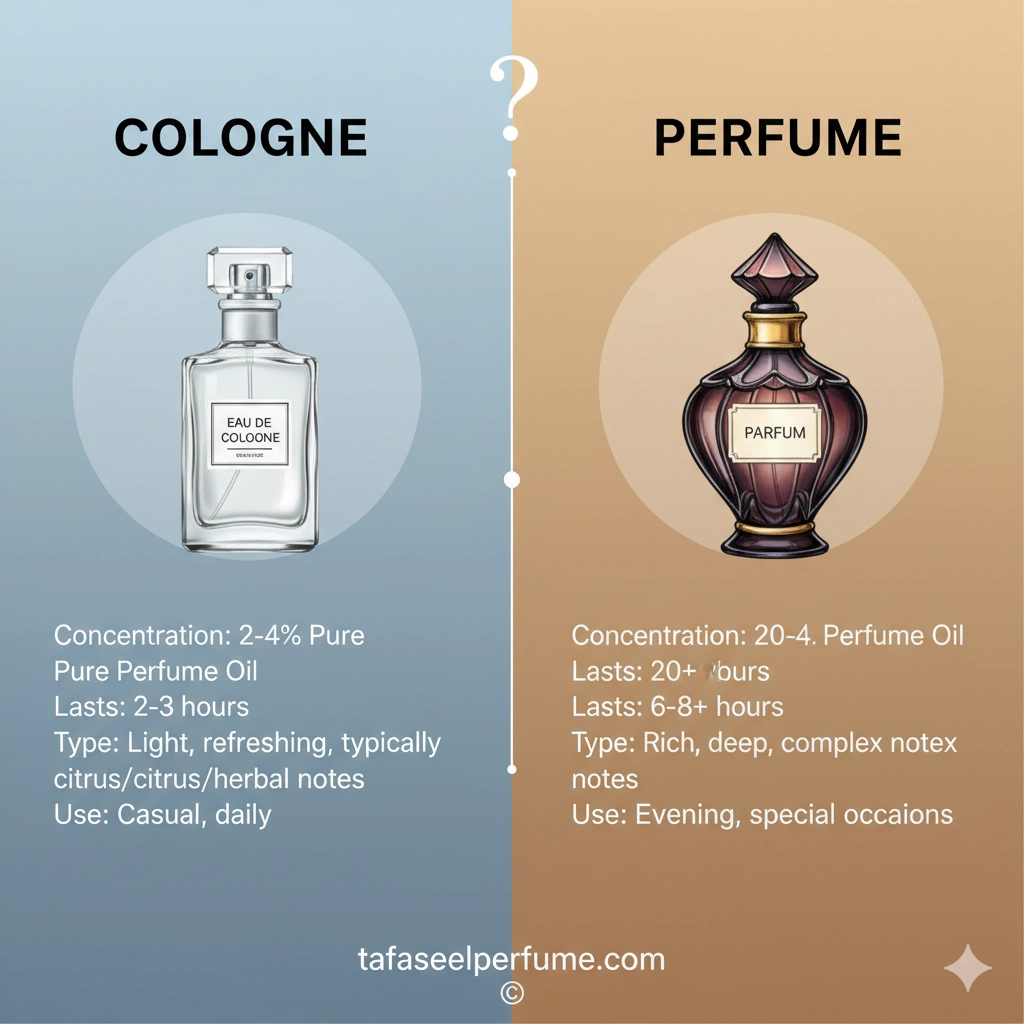
The Resilience of Solid Perfume: A Scent That Stands the Test of Time
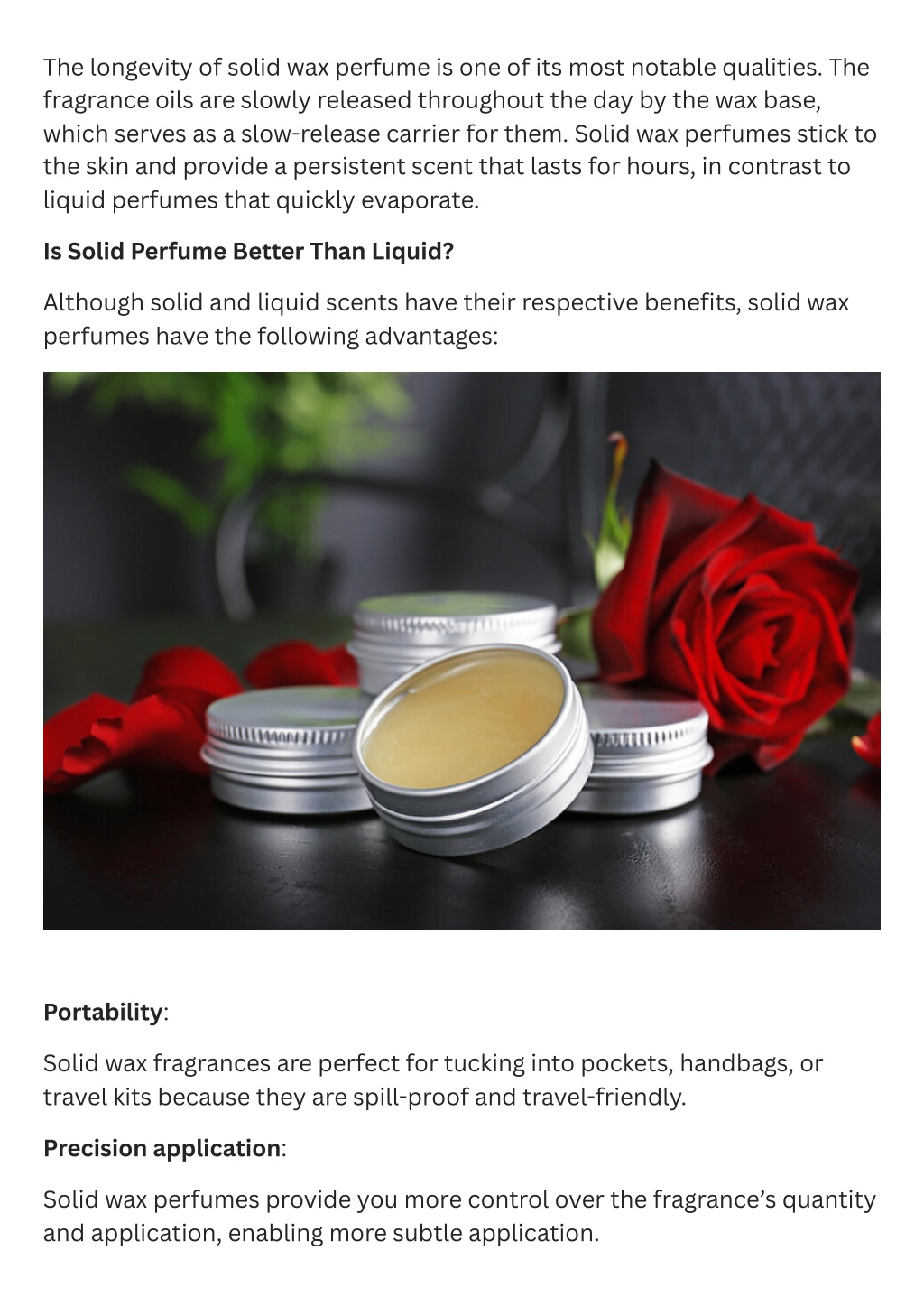
In contrast, solid perfume is the unshakable fortress of the fragrance world. Encased in a compact tin or tube, it offers a concentrated burst of scent that clings to the skin with quiet determination. Unlike its liquid counterparts, which can evaporate or dissipate, solid perfume is a slow-release marvel, designed to linger for hours without fading into the background. It is the scent equivalent of a well-worn leather jacket—timeless, reliable, and deeply personal.
The application process itself is an intimate ritual. A fingertip dipped into the waxy base, gently pressed against the pulse points of the wrist or neck, releases a burst of aroma that lingers like a secret. There is no spray, no mist, no fleeting moment of impact—just a steady, unwavering presence. This makes solid perfume ideal for those who value consistency over evolution. Whether worn during a long flight, a grueling workday, or a night out, it refuses to surrender to the elements. Heat may rise, but the fragrance remains, anchored to the skin like a steadfast companion.
Solid perfume also excels in portability and discretion. A small tin can slip into a pocket or clutch, ready for use at a moment’s notice. It doesn’t require reapplication every few hours, nor does it betray its wearer with a sudden shift in character. Instead, it offers a single, harmonious note that unfolds gradually, like the slow reveal of a well-crafted story. For those who prefer depth over breadth, solid perfume is the ultimate choice—a fragrance that doesn’t just last, but persists.
Longevity: The Battle of Hours and Skin Chemistry
When comparing the two, longevity becomes a study in contrasts. Adaptive fragrance, with its layered composition and dynamic evolution, typically lasts between 4 to 8 hours, depending on concentration and skin type. Its strength lies not in brute endurance, but in its ability to transform, ensuring that the wearer is never left with a single, stagnant impression. It is the fragrance for those who crave variety without the hassle of reapplication.
Solid perfume, on the other hand, can endure for 8 to 12 hours, or even longer in some cases. Its waxy base acts as a protective shield, slowing the evaporation of aromatic compounds. The wearer is rewarded with a scent that remains true to its original character, undiluted by the passage of time. This makes it ideal for those with active lifestyles, frequent travelers, or anyone who values a fragrance that can keep pace with their day without demanding attention.
Yet longevity is more than a numbers game. It is about the wearer’s relationship with their scent. Adaptive fragrance invites curiosity—each hour reveals a new facet, like turning the pages of a novel. Solid perfume offers comfort—a familiar embrace that doesn’t waver. One is a journey; the other is a home.
Suitability: Who Thrives With Each Type?
Adaptive fragrance appeals to the modern, ever-changing individual. It suits those who embrace fluidity in their lives—artists, entrepreneurs, and anyone who moves between environments with ease. It is perfect for those who enjoy the interplay of scent and circumstance, where a fragrance can feel different in the morning light than it does under artificial neon. It is, in essence, a fragrance for the adaptive.
Solid perfume, meanwhile, is the choice of the steadfast. It appeals to minimalists, to travelers who need reliability, and to those who prefer a scent that feels like an extension of themselves rather than a fleeting impression. It is the fragrance of choice for night-shift workers, marathon runners, and anyone who values consistency in a world of constant change. It is, in many ways, the olfactory equivalent of a well-worn sweater—comforting, enduring, and deeply personal.
Consider the professional who spends hours in air-conditioned offices and then steps into the humid evening air. An adaptive fragrance might soften in the chill of the office, then bloom into something richer outdoors. A solid perfume, however, would remain a constant, a silent reassurance that the wearer’s scent is as unchanging as their resolve.
The Sensory Experience: Touch, Sight, and Scent
Beyond longevity and suitability, the two formats offer distinct sensory experiences. Adaptive fragrance is often a symphony of liquid notes—sprays that mist into the air, droplets that evaporate on contact, leaving behind a trail that is both heard and felt. It is a fragrance that engages multiple senses: the sound of the spray, the sight of the mist, the sensation of coolness on the skin.
Solid perfume, by contrast, is a tactile experience. The act of dipping a fingertip into the wax, the slight resistance of the substance, the warmth of the skin melting the wax into a fragrant balm—all of these elements create a ritual that is as much about touch as it is about scent. There is a meditative quality to applying solid perfume, a moment of pause in a busy day. It is a fragrance that demands to be experienced, not just worn.
Visually, adaptive fragrance is often presented in elegant bottles with fine misting mechanisms, designed to be as beautiful as they are functional. Solid perfume, meanwhile, is typically housed in understated tins or tubes, prioritizing portability and durability over ornate design. Yet both formats have their own quiet elegance—one sleek and modern, the other rustic and enduring.

Conclusion
The choice between adaptive fragrance and solid perfume is ultimately a question of how one wishes to interact with scent. Adaptive fragrance offers a dynamic, evolving relationship with the wearer, a fragrance that grows and changes with the day. It is ideal for those who see their scent as a living, breathing part of their identity—something that adapts, shifts, and surprises.
Solid perfume, on the other hand, provides a steadfast, unchanging presence. It is the fragrance for those who value consistency, reliability, and a scent that endures without fanfare. It is the choice of the steadfast, the minimalist, and the practical.
Both have their place in the modern fragrance wardrobe. One is a journey; the other is a home. Together, they represent the full spectrum of olfactory experience—from the ephemeral dance of adaptive notes to the unyielding embrace of solid wax. In the end, the choice is not about which is better, but which feels right. For some, the answer will be both.