
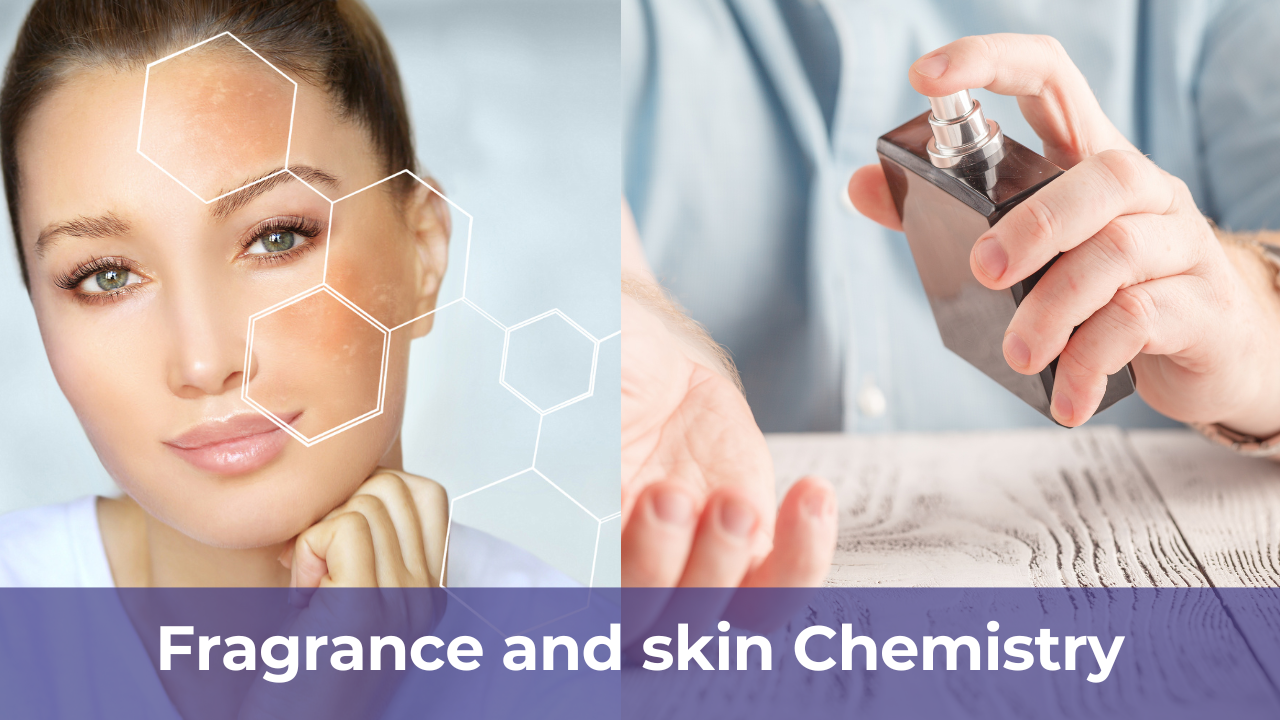
Have you ever wondered why the same perfume smells different on you than it does on someone else? Or why a fragrance that lingers beautifully on your skin in the morning might fade by evening? The answer lies in the intricate chemistry between your skin and the fragrance you wear. Adaptive fragrances—those that evolve uniquely on each wearer—are not just a marketing gimmick. They are a fascinating interplay of biology, chemistry, and personal physiology. Let’s explore how your skin transforms a perfume into a personal olfactory signature.
The Science of Skin: Your Body’s Unique Canvas
Your skin is far more than a protective barrier; it’s a dynamic ecosystem teeming with activity. Each person’s skin has a distinct pH level, sebum production, and microbial community, all of which influence how a fragrance interacts with it. Sebum, the oily secretion produced by sebaceous glands, acts as a solvent for perfume oils. The amount and composition of sebum vary widely among individuals, creating a unique environment for fragrance molecules.
For example, someone with oily skin might experience a perfume’s top notes lingering longer, as the oils help bind the fragrance to the skin. Conversely, dry skin may cause a perfume to evaporate more quickly, altering its evolution over time. This variability is why the same fragrance can smell entirely different on two people—it’s not the perfume that changes, but the skin’s reaction to it.
Fragrance Notes and Skin Chemistry: A Delicate Dance
Perfumes are composed of multiple olfactory notes, categorized as top, middle (or heart), and base notes. Each layer interacts with your skin in a distinct way, influenced by your body’s chemistry. Top notes, which are the first scents you detect, are typically light and volatile. They evaporate quickly, often within the first 15 minutes of application. However, their longevity and intensity depend on your skin’s temperature and sebum levels.
Middle notes emerge as the top notes fade, forming the core of the fragrance. These notes are more stable and can last for several hours. Their interaction with your skin’s chemistry determines how they unfold. For instance, a floral middle note like rose may smell powdery on one person’s skin due to higher pH levels, while it might appear fresher on another’s. Base notes, the deepest and longest-lasting elements, are heavily influenced by your skin’s ability to retain oils. Ingredients like vanilla, musk, or amber bind to sebum, creating a personalized sillage (the trail a fragrance leaves) that is unique to you.
This interplay explains why a perfume marketed as “fresh and citrusy” might smell “warm and spicy” on your skin. Your skin’s chemistry acts as a filter, altering the fragrance’s natural progression.
The Role of pH: Why Your Skin’s Acidity Matters
The pH level of your skin, typically ranging from 4.5 to 5.5 (slightly acidic), plays a crucial role in fragrance perception. Perfumes are formulated to interact optimally with a skin pH of around 5.5. However, if your skin’s pH is higher or lower, the fragrance’s notes may react differently. For example, a higher pH (more alkaline) can cause certain fragrance molecules to break down faster, leading to a shorter lifespan for the scent. On the other hand, a lower pH (more acidic) might preserve the top notes longer, delaying the emergence of middle and base notes.
This is why some people find that a perfume smells “off” or “muted” on their skin, while it shines on others. It’s not a flaw in the fragrance—it’s a reflection of your skin’s unique chemistry. Some skincare products, like soaps or lotions with high pH, can temporarily alter your skin’s acidity, further affecting how a fragrance develops.
Microbial Influence: The Invisible Factor
Your skin is home to trillions of microbes, including bacteria and fungi, which form a personalized microbiome. These microorganisms can metabolize fragrance ingredients, breaking them down into new compounds that alter the scent. For example, some bacteria may interact with musk or amber notes, enhancing their warmth or creating unexpected nuances. This microbial activity is why a fragrance might smell different on you than on a friend—your unique microbial fingerprint is at work.
Interestingly, research has shown that our microbiomes can even influence our fragrance preferences. People with similar microbial communities might gravitate toward similar scents, suggesting that our bodies subconsciously seek fragrances that harmonize with our biology. This could explain why certain perfumes feel “right” on some people but not others.
Temperature and Hydration: The Silent Shapers
Your body’s temperature and hydration levels also play a role in fragrance adaptation. Warmer skin accelerates the evaporation of volatile top notes, causing them to fade more quickly. Meanwhile, well-hydrated skin retains fragrance oils better, allowing the scent to develop more fully. Dehydration, on the other hand, can cause a perfume to smell sharper or more intense, as the lack of moisture forces the fragrance to cling to the skin’s surface.
This is why a fragrance might smell different in summer versus winter. In hot weather, the increased heat can make a perfume feel more volatile, while in cold weather, the scent may linger longer due to slower evaporation. Hydration levels, influenced by diet, climate, and skincare routines, further tweak this equation.
Adaptive Fragrances: Designed to Evolve
Recognizing the uniqueness of each wearer’s skin, some perfumers have developed adaptive fragrances—formulas that respond to the wearer’s chemistry to create a personalized scent experience. These fragrances often use a blend of ingredients that interact differently depending on the skin’s environment. For example, a fragrance might include both volatile and long-lasting molecules, allowing it to adapt to the wearer’s sebum levels and pH.
One innovative approach is the use of encapsulated fragrance molecules, which release their scent gradually in response to body heat or moisture. This technology ensures that the fragrance evolves naturally over time, mimicking the way your skin would interact with it if it were a traditional perfume. Other adaptive fragrances incorporate ingredients that react to the skin’s pH, altering their scent profile to suit the wearer.
Practical Tips for Finding Your Perfect Scent
Understanding how your skin chemistry affects fragrances can help you choose a perfume that truly resonates with you. Here are some tips to navigate the world of adaptive fragrances:
- Test on Your Skin: Always apply a fragrance to your skin, not just a blotter, to experience its true evolution. Wait at least 30 minutes to see how the scent develops.
- Consider Your Skin Type: If you have oily skin, look for fragrances with rich base notes. For dry skin, opt for lighter, more volatile scents that won’t feel overpowering.
- Monitor pH and Hydration: Pay attention to how your skin’s condition affects fragrances. If you notice a perfume fading quickly, your skin might be dehydrated. If it smells harsh, your pH might be off.
- Experiment with Layering: Layering fragrances can help you create a scent that adapts to your skin’s unique chemistry. Start with a light base and build up with complementary notes.
- Embrace the Uniqueness: Remember that a fragrance’s adaptation to your skin is what makes it uniquely yours. Don’t be discouraged if a scent smells different than expected—it’s part of the magic.
Conclusion
The next time you spritz on your favorite perfume and notice it evolving in a way that feels distinctly “you,” take a moment to appreciate the science at play. Your skin is not just a passive recipient of fragrance; it’s an active participant in shaping it. From your pH level to your microbial community, every aspect of your physiology leaves its mark on the scents you wear. This personalization is what makes fragrances so deeply intimate—they don’t just smell different on you; they become a part of you.
Adaptive fragrances are a testament to the beauty of individuality. They remind us that beauty is not one-size-fits-all, but a unique expression of who we are. So the next time you’re drawn to a scent that feels like it was made for you, remember: it probably was.