
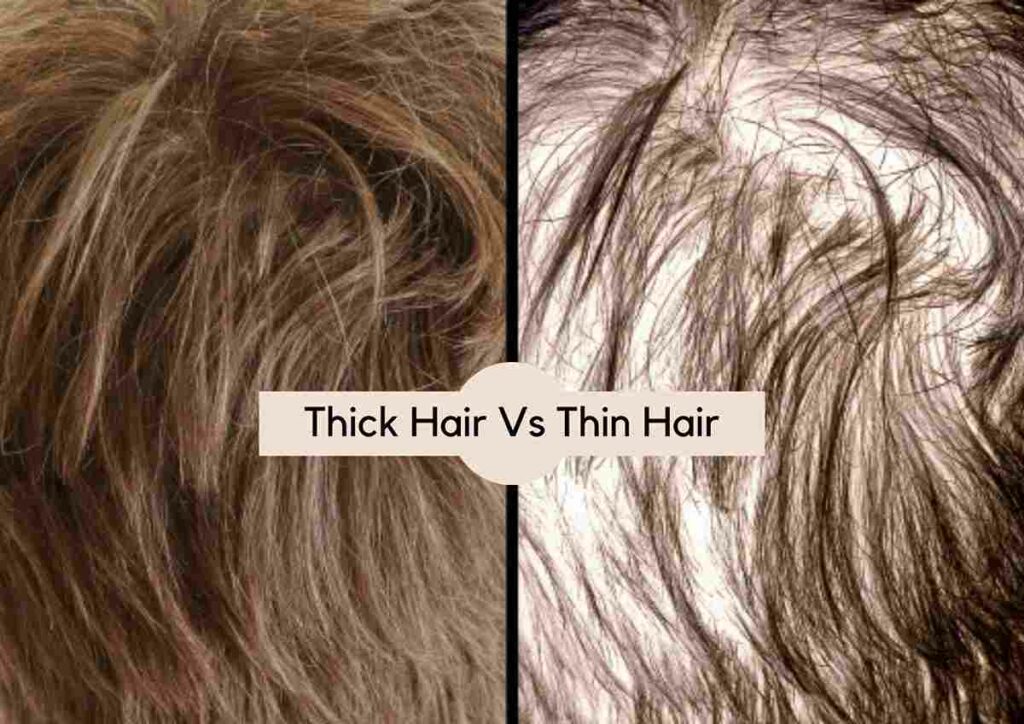
Understanding your hair type is not merely a matter of aesthetics; it can significantly influence how you care for your mane, the kinds of hairstyles you choose, and even your approach to hair products. Knowing whether you possess thick or thin hair empowers you to make informed decisions about maintenance and styling. Here, we explore expert tips to help you accurately discern your hair density, along with insights into what it means for your daily hair care routine.
1. The Hair Strand Test
The first and most straightforward method to assess your hair type involves a tactile examination of individual strands. Begin by taking a single strand of hair between your fingers. If it feels coarse and substantial, you may have thick hair. Conversely, if it seems more delicate or flimsy, it is likely thin hair. This simple test serves as the cornerstone for understanding your hair’s density.
2. The Ponytail Measure
Another practical technique to ascertain your hair type is the ponytail measurement. Gather your hair into a tight ponytail at the crown of your head. Consider the circumference: a ponytail that is easily encircled by your fingers indicates thin hair, while a thick ponytail that feels like a substantial bundle points to thick hair. This method not only gives you a visual representation but also a tangible sense of volume.
3. The Sink Test for Shedding
Observation of hair loss can also provide insights into thickness. After washing your hair, take note of the number of strands that accumulate in the sink or the shower drain. A higher count may indicate that you have thick hair, as people with denser locks often experience more shedding due to the sheer volume of hair. A scant number of strands suggests thin hair, where there is less overall density to lose during washing.
4. Clarifying Your Texture
It’s crucial to differentiate between thickness and texture. Sometimes, individuals mistake coarse hair for thick hair. Coarse hair refers to the diameter of the strand itself, while density pertains to how many strands are present on your scalp. If your hair feels rough and substantial but appears sparse, you may actually have coarse, thin hair. Familiarizing yourself with these terms helps delineate the nuances of your hair type.
5. Visual Assessment in Different Lighting
Take a moment to scrutinize your hair under various lighting conditions. Thick hair generally displays more dimension and life, absorbing light and appearing voluminous. Conversely, thin hair can seem almost transparent and might lie flatter against the scalp. Try this assessment in natural light, as artificial lighting can often obscure the true nature of your hair.
6. Consultation with Professionals
When in doubt, consulting a professional hairstylist can yield invaluable insights. Stylists possess extensive training and experience in hair analysis; they can not only help you identify your hair type but also recommend suitable care techniques and products. A thorough consultation can reveal nuanced aspects of your hair that may have gone unnoticed.
7. The Influence of Hair Health
It’s essential to recognize that hair density can fluctuate due to health factors, environmental stresses, or styling practices. For instance, damage from over-processing or frequent heat applications can result in breakage that ultimately affects your perceived hair density. Therefore, evaluate your hair’s health as a part of understanding its thickness; healthy hair appears naturally thicker and more vibrant.
8. The Role of Hair Products
Your hair care regimen can also impact how thick or thin your hair appears. For individuals with thin hair, using volumizing shampoos and lightweight conditioners can enhance body and fullness, creating an illusion of density. On the contrary, those with thick hair may benefit from nourishing treatments that maintain moisture without weighing the hair down. Recognizing the compatibility of your hair type with specific products is pivotal.
9. Maintenance for Your Hair Type
Once you establish whether you have thick or thin hair, the next step involves implementing a maintenance routine tailored to your hair type. For thick hair, focus on deep conditioning treatments and detangling products, as this hair type often requires more hydration and care. If you have thin hair, consider minimizing the use of heavy waxes and oils that can weigh it down, instead opting for lightweight sprays that impart volume without bulk.
10. Embrace Your Unique Mane
Ultimately, whether you discover that you have thick or thin hair, embracing your unique texture and density is essential. Every hair type has its idiosyncrasies and beauty; understanding your own enables you to celebrate what you have. With the right knowledge and care, thick hair can become voluminous and exuberant, while thin hair can exude elegance and sophistication. Regardless of the classification, confidently showcasing your locks will always be in style.
In summary, identifying whether you have thick or thin hair involves a combination of sensory testing, visual observation, and professional consultation. By employing these expert tips, you will place yourself in a position of confidence regarding your hair care choices, paving the way for healthier and more stylish hair.