

There is a peculiar, almost archaeological intimacy to the moment a lipstick tube clicks empty. That hollowed-out bullet, once a magic wand of pigment and power, becomes a piece of plastic detritus. Most people toss it without a second thought, joining the millions of tons of cosmetic waste that choke our landfills. But look closer. That small, cylindrical corpse is a monument to industrial complexity—a hybrid of aluminum, polypropylene, and often, a non-removable spring. It cannot simply vanish. To vanquish it requires strategy, and that is where TerraCycle enters the fray, offering a peculiar brand of absolution for our beauty sins.
The Anatomical Challenge: Why Lipstick Tubes Defy Conventional Recycling
Standard municipal recycling centers are not equipped for your vanity’s fallout. A lipstick tube is a composite object, a devilish marriage of disparate materials fused so intimately that separation is a Herculean task. The outer casing is often a rigid plastic alloyed with metallic powders for that luxurious heft. The inner mechanism involves a threaded polyethylene spiral and a tiny aluminum cup that once held the pigment. These are not recyclable together. In the brutal machinery of a typical MRF (Materials Recovery Facility), such a tiny, dense object slips through sorting screens, contaminating glass cullet or jamming conveyor belts. Your good intentions become industrial sabotage. This is the first hard truth: the very design that makes a lipstick satisfying to use makes it nearly impossible to recycle through conventional means.
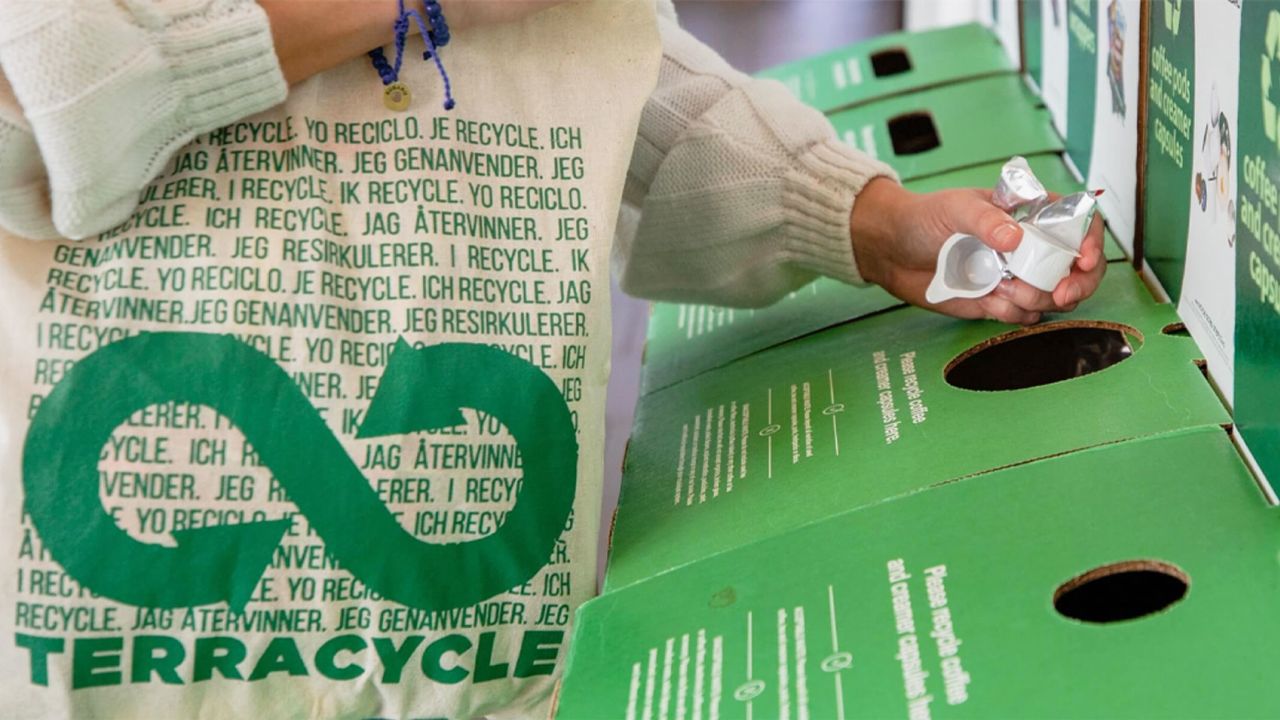
The TerraCycle Alchemy: From Cacophony to Commodity
TerraCycle operates on a fundamentally different premise. They see value in the unvalued. Their process is not recycling in the traditional sense; it is a form of industrial alchemy. They accept the entire cacophony—the metallic base, the plastic lid, the stubborn internal spring—and pulverize the assembly into a homogeneous fluff. This material is then melted and extruded into plastic lumber or pellets. A lipstick tube becomes a park bench. There is a brutal, satisfying poetry in that transformation: the object of intimate glamour is reincarnated as a public, utilitarian object. You are not just discarding waste; you are contributing feedstock for a new, low-value but infinitely durable material. It is a closed-loop system for the debris of desire.
The Logistics of Penance: How to Participate in the Program
Accessing this salvation requires premeditation. TerraCycle operates through specific, often brand-sponsored, programs or its paid “Zero Waste Box” service. Do not merely toss your empties into your home bin. You must first check the TerraCycle website for a Beauty Products Recycling Program. Major cosmetic houses—from L’Oréal to Garnier—partner with them to provide free shipping labels. You collect your tubes, let them desiccate completely to avoid mold, and seal them in a cardboard box. The act is monastic in its patience. You must be willing to store a bag of grubby plastic relics until you reach critical mass. This delay—the hoarding of one’s own cosmetic corpse—forces a confrontation with consumption itself. You see the sheer volume of your application, and it is sobering.
The Perfidious Exception: Tubes with Mirrors and Magnetic Closures
Not all plastic corpses are created equal. The system has loopholes and treacheries. A tube with a mirror embedded in the lid introduces a toxic element: the silver backing on glass. A magnetic closure uses rare earth metals that contaminate the melt stream. These must be physically removed before donation—a fiddly, frustrating task. If you cannot pry the mirror out with a butter knife, the entire tube becomes a contaminant. Similarly, tubes with stubborn adhesive labels or metallic paint that flakes must be scrutinized. The pristine recycler is a detective. You must learn to read the bottom of your empties, to know the resin identification codes (RICs) that hint at treachery. Ignorance is no longer bliss; it is pollutive.
The Rinsing Ritual: The Necessary Anointment
Before your tube can be reborn as a plank, it must be cleansed. Lipstick residue is an oily lipid smorgasbord that can spoil an entire batch of recycled plastic. Use a cotton swab or small brush to excavate every last smear of cerise or nude from the base. Rinse the parts with warm water and dish soap. Then, let them dry completely on a towel. Moisture breeds mildew, and a moldy tube is a ruined batch. This is a meditative act—a secular ritual of purification. You are scrubbing away the vestiges of your persona. Each swipe of the cloth is a small penance for the pleasure the product once gave. Do not rush this. The system punishes carelessness.
The Gleaming Horizon: When a Tube Becomes a Tree (or a Shipping Pallet)
Once your collection box is full, you mail it. TerraCycle processes the lot, shredding it into flakes called “regrind.” This is then compounded into a dark, speckled plastic that has no beauty but immense utility. It becomes Garden Planters, park benches, and industrial shipping pallets. The glittering, sensual object is now coarse, black, and anonymous. This is the ultimate irony: the pursuit of personal beauty, when properly managed, contributes to the infrastructure of the public, the functional, the purely structural. Your discarded Revlon becomes the seat beneath a tired commuter. Your MAC bullet becomes a plank that holds cargo on a ship. The cycle is complete, and it is profound in its mundanity.
The Ethical Blemish: Acknowledging the Limits of the System
Let us not flatter ourselves. TerraCycle is not a panacea; it is a sophisticated form of triage. The energy required to ship a single, lightweight tube across a continent often negates the environmental benefit. The resulting plastic lumber cannot be recycled again into anything of higher value—it is downcycled, not infinitely looped. Furthermore, the program is often funded by the very corporations whose packaging creates the problem. You are paying, indirectly, to have your own waste managed. Some critics call this “greenwashing” disguised as virtue. Do not let perfection be the enemy of good. TerraCycle is the best we have for the complex, chemically-bonded demons of the beauty industry. It is a stopgap, not a revolution. But in a world drowning in non-degradable desire, a stopgap is a lifeboat. Use it.