
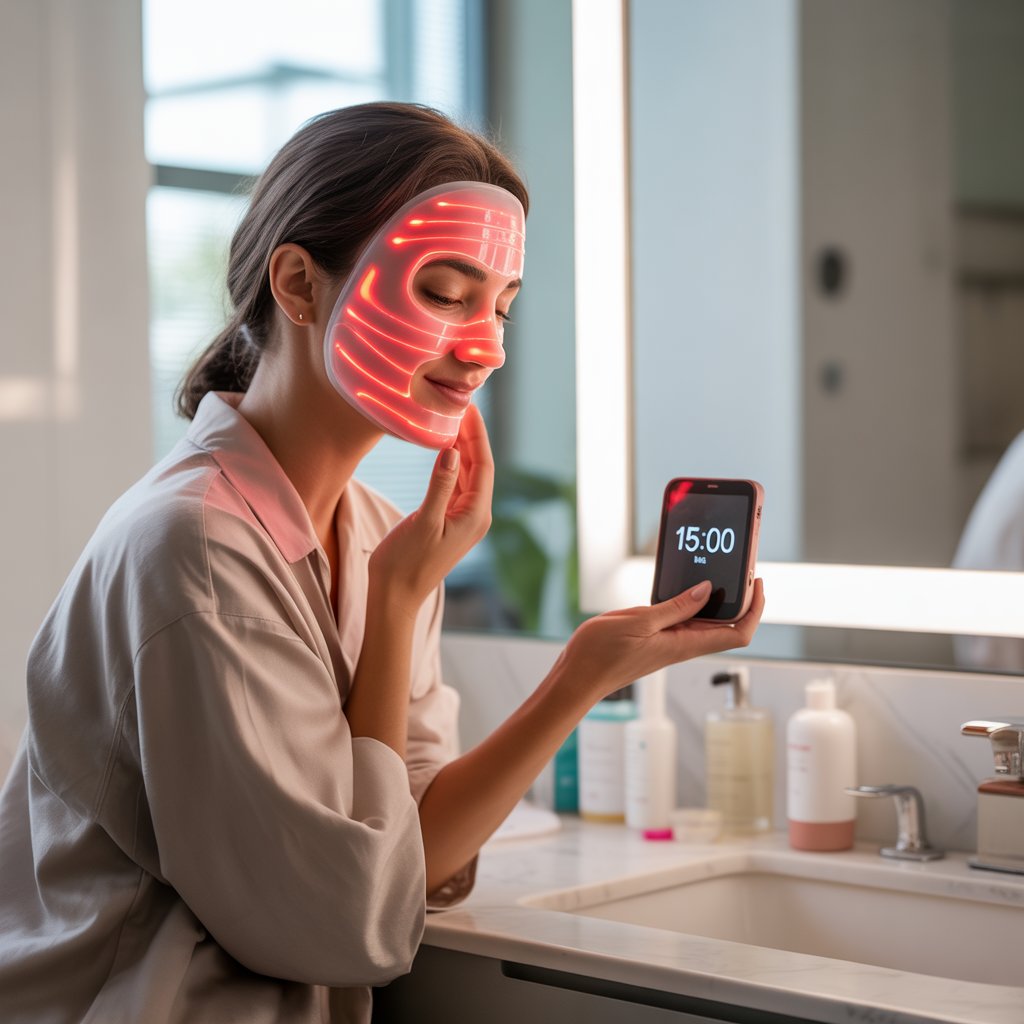
You believe you are healing. You strap on that glowing mask, a high-tech panacea promising cellular renewal and the obliteration of acne. You see the light, and you feel the warmth. But what you don’t see is the microscopic battlefield you’re seeding anew. Every session is a double-edged sword; the very device meant to purge your pores is becoming a fomite, a silent vector shuttling the *Propionibacterium acnes* you just liberated right back onto your freshly cleansed face. You aren’t sanitizing. You are inoculating. The path to clear skin is not paved with light alone; it is paved with ritualistic, near-aseptic cleanliness. This is not about wiping down a machine. This is about breaking the chain of pathogenic repatriation.
The Plasmatic Microbiome: Why Your Face and Mask Share a Dirty Secret
You understand the concept of laundry—separation of colors, the heat cycle. Yet your LED mask, a device that presses intimately against an active acne lesion, gets a cursory swipe of a makeup wipe. This is the hygiene equivalent of licking a scalpel. The stratum corneum you exfoliate, the lipid-rich sebum you secrete, and the purulent exudate from a burst pustule create a nutrient-dense biofilm on the silicone or plastic of your mask. This isn’t just dirt; it’s a thriving micro-colony. When you apply the mask again the following night, you are not applying light; you are performing a bacterial transplantation. The device becomes a reservoir, allowing specific strains of *Cutibacterium acnes* or *Staphylococcus epidermidis* to achieve a confluence that outcompetes your skin’s natural defenses. You must view the mask as a piece of surgical equipment, not a beauty gadget.
Lipophilic vs. Hydrophilic: The Solvent Warfare Against Sebaceous Grime
Your first mistake is thinking water is enough. It is not. Acneic sebum is lipophilic—it loves lipids. Water beads off it like a duck’s back. To break down the hydrophobic barrier of dried oil and dead cells, you must deploy a solvent. A gentle, non-comedogenic oil cleanser applied to the mask’s surface, massaged in for thirty seconds before any water touches the device, is your first volley. This saponification process lifts the tenacious, waxy residue that traps bacteria. Follow this immediately with a gentle surfactant—a foaming cleanser free of sulfates or harsh alcohols—to emulsify and flush away the dissolved debris. This two-step cleansing mimics the Korean skincare routine, but applied to your hardware. You are not cleaning a surface; you are performing a chemical extraction of an organic film.
Thermal Denaturation: The Heat Threshold No Bacteria Survives
Most instructions whisper about “gentle wipes” and “soft cloths.” That is the language of appeasement, not eradication. To achieve a true sanitization, you must induce thermal stress. Hospital-grade sanitation protocols use an autoclave, but your mask, a delicate web of LEDs and wiring, cannot withstand 121°C steam. However, a UV-C sanitizer wand or a dedicated device sanitizer cabinet can deliver the required 254nm wavelength to cause pyrimidine dimerization in bacterial DNA, rendering them replication-incompetent. If you lack UV-C access, a 70% isopropyl alcohol solution (not 91%, as it evaporates too fast to kill) applied via a microfiber cloth and left to dwell for a full 60 seconds will denature the protein coats of bacteria and viruses. The key is the *dwell time*. A quick spritz is a performative gesture. Patience is the bactericide.
Crevice Contamination: The Ocular and Nasal Embrasures
Your mask is not a flat plane. It has contours, cutouts for your eyes and nose, and a bridge. These are the thermal shadows of sanitation, the spots where your breath condenses and your tear film collects. These areas are rich in lactoferrin and lysozyme—components of your immune system—but also in the debris you wish to eject. Use a cotton swab saturated with your sanitizer to meticulously trace every edge and rim. This is micro-debridement. You must approach this with the precision of a restoration artist cleaning a fresco. A single overlooked colony in the nasal notch can be the genesis of your next breakout. The eye cutouts, often touched by mascara-stained lashes, require special attention for ophthalmologic safety; ensure any alcohol has fully evaporated before the mask touches your eyes again.
The Desiccation Protocol: Why Wetness is the Enemy of the Luminous Promise
After the chemical and thermal assault, you are left with a wet machine. Moisture is the medium of microbial motility. You must not let the mask rest in its own dampness. Use a sterile, lint-free cloth to pat the surface dry. Then, allow the mask to air-dry completely on a clean, UV-exposed surface—a windowsill, or beneath a germicidal lamp—for at least thirty minutes before storage. Do not fold it. Do not place it in a drawer with your other brushes and sponges. Store it vertically on a rack or in a hard, ventilated case. You are creating an inhospitable xerophytic environment. Bacteria, like your acne, thrive in the humid, the dark, the stagnant. You are converting your mask storage into a desert where no biofilm can establish a foothold.
Chronological Debridement: The Pre-Session Ritual as a Prophylactic
The optimal time to sanitize is not after the session, but immediately *before* it. This is a shift in temporal philosophy. You clean the mask when it is already clean, just before it touches your cleansed, toned, and prepped skin. This guarantees absolute freshness. It turns the act of mask application into a hygienic sacrament. By performing a rapid, five-second alcohol wipe immediately prior to donning, you eliminate any particulates that settled during storage. You are not cleaning yesterday’s sins; you are anointing the tool of your transformation. This pre-emptive strike ensures that the only thing the light interacts with is your skin, not the lingering remnant of last night’s inflamed papule. You are sealing the hygiene loop, creating a closed system of pure photobiomodulation.
Frequency as Function: The Calculus of Contamination Risk
You cannot sanitize once and trust the result. Every session introduces a new bioload. The frequency of deep sanitation must correlate directly with the severity of your acne. A person with one or two comedones may get away with a bi-weekly deep clean. An individual with grade III inflammatory acne, characterized by pustules and nodules, requires a full sanitization protocol *before every single use*. There is no middle ground. This is the difference between cosmetic use and therapeutic intervention. Be honest about your skin’s condition. If you are actively purging, you are also actively contaminating. Halve the interval between your cleanings. Treat the mask like a wound dressing. A fresh, sterile surface for every contact is not paranoia; it is the fundamental principle of preventing autoinoculation. Your skin is a closed ecosystem; do not allow your device to become its invasive species.