
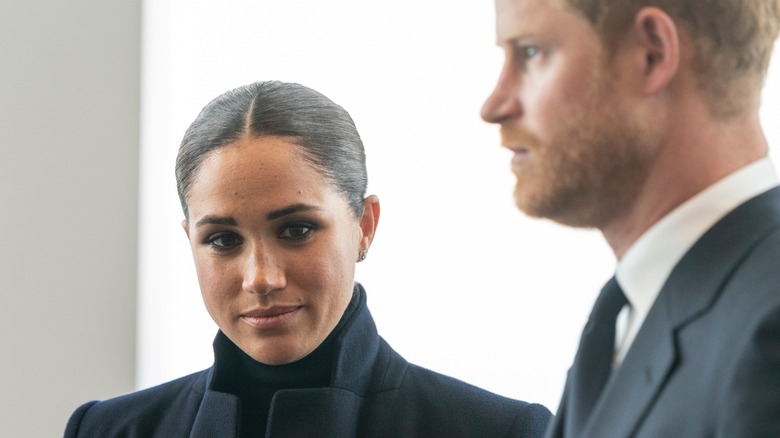
In recent years, the public narrative surrounding Prince Harry and Meghan Markle has been a maelstrom of opinions, sentiments, and incessant media scrutiny. Their decision to withdraw from royal duties and seek a more private life has been met with mixed responses, often swirling in a maelstrom of sensational headlines and polarized opinions. Herein lies a comprehensive analysis of their journey, dissecting the nuances behind their desire for privacy, the imperatives that drove their choices, and the broader implications of their story within the sociocultural zeitgeist.
The Genesis of a New Narrative
The saga of Meghan and Harry can be traced back to a serendipitous meeting that blossomed into a highly publicized courtship. Their engagement and subsequent marriage in 2018 captivated audiences worldwide, melding traditional royal protocols with contemporary romantic notions. However, this union was not without its challenges. From the onset, Meghan faced intense media scrutiny, a labyrinthine web of tabloid journalism that often skewed her image, presenting a caricature that diverged from her authentic self. This initial media onslaught set the stage for the couple’s complex relationship with the press, establishing a battle between personal agency and public perception.
The Weight of Public Expectation
As members of the British royal family, Harry and Meghan were expected to conform to an archaic framework of royal decorum. Yet, within this gilded cage, they found themselves at odds with traditional norms. Meghan, an American actress and a woman of mixed heritage, represented a departure from the usual profile of a royal. Her joining the family highlighted cultural shifts, yet also exposed her to a level of scrutiny that implicated deeper societal issues, including racism and misogyny.
Public opinion oscillated wildly; some lauded their progressive ethos, while others vehemently criticized their choices. The juxtaposition of their philanthropic ambitions with the royal family’s legacy often incited debate over their commitments to social issues versus the expectations of their roles. Their approach to mental health advocacy, environmentalism, and their focused efforts on issues of social justice juxtaposed sharply against the backdrop of a monarchy steeped in tradition.
The Decision to Step Back
In January 2020, Prince Harry and Meghan Markle made a watershed decision to step back from their royal duties, a move that reverberated throughout the United Kingdom and beyond. Framed by the couple as a pursuit of autonomy and a desire for privacy, this decision was heralded by some as a courageous stance against the relentless pressures of royal life, while others condemned it as a rejection of duty and tradition.
However, beneath the surface of this decision lies a profound narrative about mental health and self-preservation. Harry, who has been candid about the psychological toll of losing his mother, Princess Diana, to the unforgiving prying of the press, highlighted the urgent need for mental well-being—a theme echoed by Meghan, who spoke out about her struggles with anxiety and depression. Their choice to distance themselves from royal obligations was not merely an abdication of responsibility, but rather an assertion of their right to prioritize their mental health and familial well-being.
Defining Privacy in the Digital Age
In an era dominated by social media and 24/7 news cycles, the concept of privacy has evolved dramatically. The couple’s endeavor to establish boundaries around their personal lives serves as a microcosm of larger societal struggles with privacy. In their pursuit of sanctuary, they have both straddled the line between public figures and private citizens, often facing backlash for perceived contradictions.
The ensuing media frenzy following their departure illustrates the paradox of their situation. While they sought seclusion, the attention only intensified, leading to further headlines that derided their efforts, underscoring society’s insatiable appetite for personal narratives. Such situations prompt ethical considerations regarding the role of media in respecting individual boundaries versus its obligations to inform the public.
Philanthropy and Activism
Despite distancing themselves from royal duties, Harry and Meghan remain committed to charitable endeavors, launching their own foundation, Archewell. The organization is emblematic of their mission to effect change across various sectors—including mental health, gender equality, and conservation efforts. Their philanthropic pursuits encapsulate a renewed blueprint of modern royalty; rather than merely existing within a traditional framework, they challenge systemic issues and engage with pressing global challenges.
Moreover, their initiatives are not merely altruistic gestures but strategic interventions designed to foster dialogue and encourage others to engage in activism. They continue to leverage their platform, navigating the complexities of fame while advocating for social justice and systemic reform.
The Intersection of Media, Royals, and Public Perception
Examining the broader implications of Harry and Meghan’s choices requires an exploration of the intricate relationship between the media, royal expectations, and public perception. The couple’s experience illuminates the challenges faced by contemporary public figures in balancing personal desires with societal expectations.
Their story also serves as a reflection of a cultural moment where notions of privacy, celebrity, and responsibility are being renegotiated. The dialogues ignited by their experiences resonate beyond their own lives, encouraging others to contemplate the ethics of media consumption and the responsibilities of public figures in fostering dialogue around mental health, race, and societal norms.
Conclusion
Ultimately, Meghan and Harry’s journey is not simply a tale of love, celebrity, and royal duty; it is a multifaceted narrative that invites profound reflection on larger societal themes. Their desire for privacy, while met with criticism and scrutiny, speaks to shared human experiences—mental health struggles, the complexities of identity, and the ongoing battle for agency in an increasingly interconnected world.
As they continue to navigate their path, their story evolves. It serves not only as a case study of modern royalty but also as an emblem of the burgeoning movement towards transparency, compassion, and understanding in a world often characterized by conflict and division.