

Let’s be brutally honest for a second. When you smear a petrochemical sludge on your lips, are you really moisturizing, or are you just licking the nozzle of an oil pipeline? That glossy, seductive sheen on your kisser—the one promising salvation from chapped winter hell—might just be a cocktail of microplastics designed to seal in moisture by suffocating your skin with a layer of synthetic film. But here’s the playful, prickly question: can you find a balm that actually heals your lips without turning your bloodstream into a microplastic dumping ground? The challenge is that the beauty industry has conditioned us to equate “waxy slickness” with “hydration.” We have been duped. The real test is finding a balm that eschews polyethylene, polybutene, and the dreaded paraffinum liquidum for ingredients that a bee would recognize. This is the search for the honest balm.
The Great Plastic Deception: Why Your “Natural” Balm Is a Lie
You think you are being virtuous. You bought the balm in a cardboard tube. The label screams “eco-friendly.” Yet, the second you twist the base, you are applying a thin layer of polyethylene microbeads. These are not the crunchy exfoliating beads of yesteryear; these are the invisible, film-forming polymers that give the product its glide and shine. The cosmetic industry’s dirty little secret is that “occlusive” is a fancy word for “plastic wrap.” When these hydrocarbons degrade under UV light, they fracture into nanoplastics small enough to breach the dermal barrier. This is not a hippie conspiracy theory. It is a documented fact that your lips, being one of the most absorbent tissues on your body, are a direct route for these xenobiotics to enter your lymphatic system. The plastic-free revolution is not about saving turtles; it is about saving your own lymph nodes.
Beeswax: The Original Microplastic-Free Emulsifier
Here is your first redemption: the humble beeswax. But do not reach for just any golden block. True beeswax, harvested from Apis mellifera honeycombs, is a complex matrix of over three hundred compounds. It is not a homogenous lipid. It breathes. Unlike petroleum jelly, which creates an anaerobic seal that traps bacteria and dead skin, beeswax forms a semi-occlusive lattice. It allows the skin to respirate while preventing transepidermal water loss. The trick is to find a balm where beeswax is the backbone, not a filler. Look for “cera alba” on the ingredient list, and ensure it is the top component, not buried beneath hydrogenated castor oil. The texture will be slightly less slick. It will have a tactile waxiness that demands you warm it between your fingers. This is a feature, not a bug. That slight friction is the sound of authenticity.
The Anhydrous Anarchy: Lanolin’s Unholy Revival
Be cautious of the “vegan” label. Many vegan butters are hydrogenated to achieve a waxy consistency, and that hydrogenation process often uses nickel catalysts that leave trace metals. If you are not a purist, consider the lanolin path. Lanolin, the sebaceous secretion of sheep, is chemically closer to human sebum than any plant oil. It is a sterol-rich emollient that penetrates the stratum corneum rather than sitting on top. When we say “microplastic-free lip balms that actually work,” we mean balms that modify the lipid barrier, not just coat it. The challenge is the smell; raw lanolin smells like a wet barn. But a well-refined wool grease is odorless. It is the alchemical trick that makes a balm last through a polar vortex without requiring a re-application every hour. Do not fear the sheep. Fear the plastic.
Candelilla vs. Beeswax: The Vegan Vexation
For the ethically committed, candelilla wax rises as the botanical savior. Extracted from the leaves of the Euphorbia cerifera shrub, this wax is harder and more brittle than beeswax. This presents a texture challenge. A candelilla-based balm can feel chalky or powdery if the formulation is not balanced with high-viscosity liquid oils like jojoba or meadowfoam seed oil. The trick is to look for formulations that use “candelilla wax” and “candelilla oil” or “jojoba esters.” This creates a crystalline structure that mimics the plasticity of polyethylene without the toxicity. The drawback? Candelilla is expensive and difficult to source ethically, often leading to price gouging. If you pay less than $12 for a “candelilla balm,” you are likely buying a synthetic hybrid. The cheap stuff is a lie wrapped in a marketing brochure.
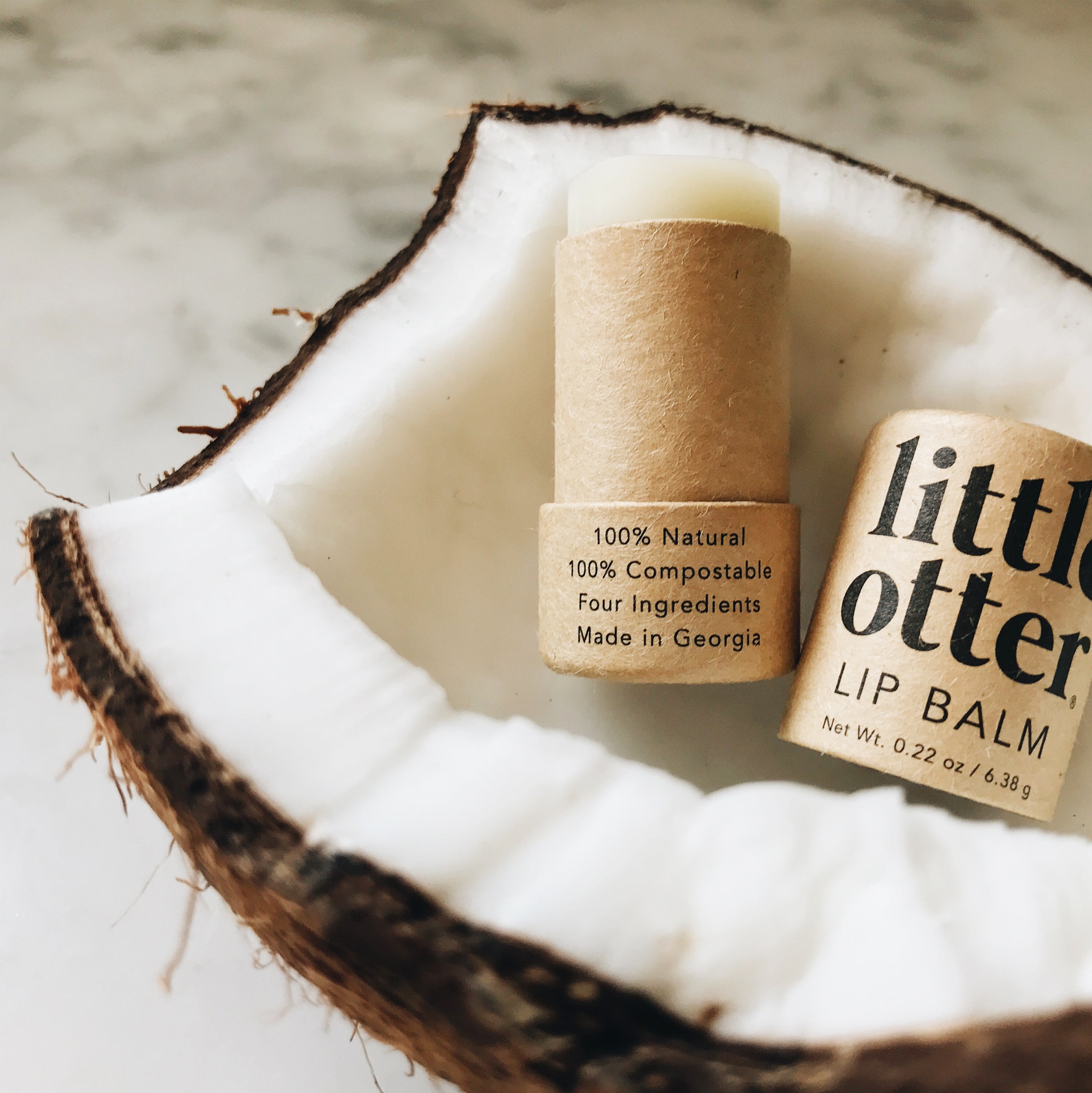
Paper Tubes and Metal Tin Fetishism
The packaging is not the product. Stop worshipping the container. A plastic-free lip balm shoved into a bamboo tube that is coated in a lacquer of polyurethane resin is still a plastic delivery system. The gold standard is a simple, unlined aluminum tin or a paper tube that uses a starch-based adhesive. The image of a balm in a brown paper tube is seductive, but check the interior. Is there a waxy liner? That liner is often silicone or acrylic. True zero-waste formulations utilize the product itself to create the structural rigidity. Some artisanal makers press the balm into a dry tube, relying on the physical lock of the wax to hold form. These balms are softer. They will bend if left in a hot car. That fragility is the sign of integrity. If it survives a summer heatwave without melting, it is filled with high-melting-point synthetic waxes.

The Three-Oil Test: A Masterclass in Emollient Efficacy
Forget the claims of “hydration.” Lips do not contain sweat glands or hair follicles. They cannot hydrate themselves. They can only be protected from dehydration. The best microplastic-free balms employ the “triple-oil” architecture: a penetrating oil (like sunflower or apricot kernel), a structuring oil (like shea butter or cupuaçu butter), and a sealing oil (like castor or rice bran oil). This trinity mimics the structure of the skin’s own barrier. When you find a balm with this profile, the application feels different. It sinks in rather than sliding off. You can feel the melt point—the temperature at which the solid transforms into a liquid on your lip—should be just below body temperature. If the balm stays hard and requires aggressive rubbing, you are abrading the delicate vermilion border. The perfect balm disappears into the skin, leaving only a faint memory of protection.
The Sniff Test: Aromatherapy as a Red Flag
Beware the balm that smells like a fruit cocktail. Essential oils are volatile hydrocarbons that can act as dermal sensitizers, especially on the mucosa. When formulators use copious amounts of peppermint or cinnamon oil, they are often masking the rancid odor of oxidized plant oils. Furthermore, the “tingle” from peppermint is a mild chemical burn. It increases blood flow to the surface, creating a red, plump look, but it is a stress response. True microplastic-free balms rely on the olfactory neutrality of high-quality base ingredients. A balm that smells like nothing, or has the faint nuttiness of unrefined shea, is a balm that trusts its ingredients. Anything aggressively scented is a cosmetic corrective for a flawed foundation. You want the balm that is unashamed to smell like wax and fat. That is the smell of victory.