

Let us, for a moment, suspend the tyranny of evidence-based skepticism and wade into the warm, pulsing, LED-lit waters of a modern beauty conundrum. You have seen the slick Instagram ads, the dermal neurotic friend who now glows like a cherub, the before-and-after shots that beg to be Photoshopped. The question, however, remains stubbornly present, defiantly uncomfortable: can a box of red lights genuinely liquefy the dimpled, stubborn rebellion of cellulite, or are we all just paying a rather exorbitant price for a very pleasant tanning session for the soul? The stage is set for a heretical inquiry.
The Topography of the Adipose Rebellion
Before we blame the light, we must understand the geography of the crime. Cellulite is not fat; it is a structural heresy. Beneath your dermis, fibrous septae—think of them as microscopic suspension cables—tether your skin to deeper tissue. When these cords tighten and fat protrudes through the weakened matrix, you get that lumpy, cottage-cheese aesthetic that drives the beauty-industrial complex into a frenzy. It is a mechanical failure, not a metabolic one. Most topical creams and invasive suckers simply slap a bandage on a geological fault line. This is where the red photon enters, whispering promises of collagen synthesis and microcirculation, like a diplomat trying to negotiate peace in a civil war of connective tissue.

Photon Persuasion: The Cellular Hypnosis
Let us descend into the subatomic. Red light therapy, or photobiomodulation, is the art of bombarding your mitochondria with specific wavelengths—typically 630 to 660 nanometers for surface work, and 810 to 850 for deeper penetration. Your cellular power plants, those ancient bacterial symbiotes, greedily absorb these photons. The resulting adenosine triphosphate (ATP) production explodes. In theory, this energetic surplus supercharges fibroblast activity, thickens the dermis, and smoothens the textural nightmare above. Think of it less as a fat-melting laser and more as a pep talk for your lazy collagen factories. The devil, however, is in the dosimetry. Too little light is a placebo; too much, and you induce oxidative stress. The sweet spot is a very particular kind of torture.
The Fibril Frontier: Can Light Sever the Tethers?
Here is the crux of the heresy. If cellulite is caused by rigid, contracting septae, then treating the fat or the skin above is only half the battle. The real target is the fibrous corset itself. Some research suggests that near-infrared light can induce a temporary softening of these bands, increasing tissue laxity and allowing the fat pockets to recede from the surface. Yet, this is not a structural release; it is a temporary relaxation. It is akin to stretching a tight guitar string, only to have it snap back when the heat dissipates. The reality is that while the skin may appear tighter and the microcirculation more robust, the underlying architecture of the septae remains largely unchanged. We are not cutting the ropes; we are merely convincing the skin to look the other way.
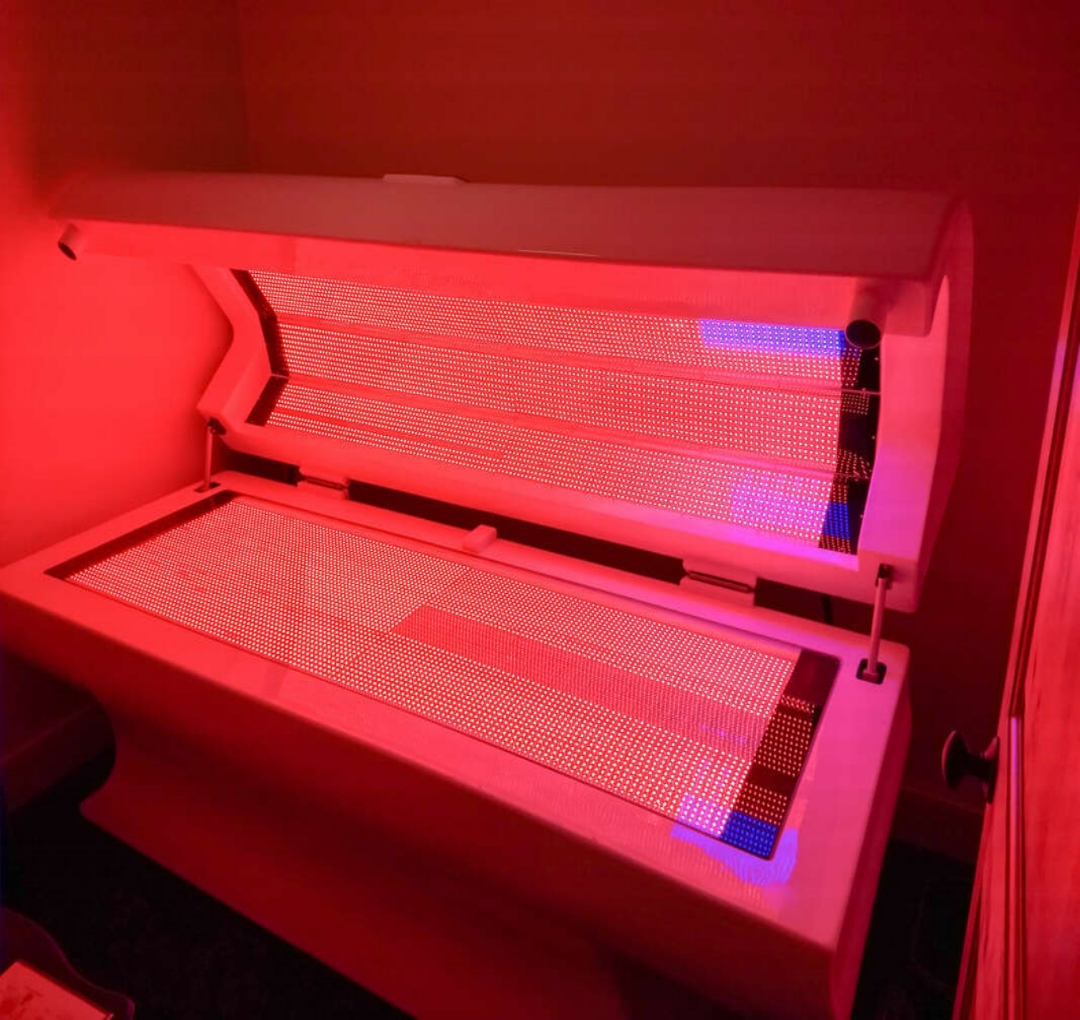
The Temporal Mirage: Results That Vanish at Dawn
You will read the testimonials, and they will seem concrete. “I lost two inches in four weeks!” The truth is more nuanced, and far more malevolent. The visual improvement seen with red light therapy is often a product of transient vasodilation and lymphatic drainage. The light heats the tissue, flushes it with oxygenated blood, and temporarily reduces edema. This can make the skin look smoother for a few hours, a classic case of beauty’s trompe-l’œil. Chronic use, over months, may yield a genuine 10-15% improvement in skin laxity. But the myth of the *cure*—of the light that eradicates cellulite permanently—is a stubborn ghost. It is a maintenance therapy, a seductive ritual, not a surgical revolution.
The Nonsense of the Single Bulb
A common pitfall is the consumer-grade, hand-held gadget that promises the world for ninety-nine dollars. These devices are often underpowered, delivering a pathetic fluence that barely tickles the mitochondria. A clinical-grade panel delivers power densities of 100-200 mW/cm²; your plastic wand from an online marketplace might struggle to reach 20. To truly challenge the fibrous septae, you need brutal, consistent fluence. The body is not impressed by weak intentions. If you are not exceeding the Arndt-Schulz law (the principle of biological hormesis) with sufficient irradiance, you are merely playing with a glorified nightlight. This is where the myth collapses into disappointment; not because the modality fails, but because the application is cowardly.

The Scourge of Synergy: The Unholy Trinity
No self-respecting aesthetician will admit this: light therapy works best when it is not alone. It is a synergistic parasite. Without mechanical stimulation (like massage or radiofrequency), the lymphatic drainage benefits are negligible. Without dietary management of excessive adipocytes, the fat layer remains a bulging traitor. The most compelling results come from combining red light with acoustic wave therapy, which physically ruptures the septae, followed by the light to heal the insult. This is not a simple fix; it is a multi-front assault. To expect a monotherapy of photons to defeat the complex, evolutionarily-designed stubbornness of human adipose tissue is to misunderstand the depth of the enemy. You must starve it, shake it, and then irradiate it.
The Verdict: A Beautiful Delusion with a Kernel of Truth
So, myth or reality? It is a messy, frustrating hybrid. The reality is that red light therapy is a magnificent tool for improving dermal texture, boosting collagen, and promoting a temporary effacement of dimpling. It is a reality for those who treat it as a performance enhancer for the skin, not a solution for the structure. The myth is the promise of permanent eradication, of a passive cure that requires no sacrifice. Cellulite is a biomechanical reality for most bodies, a stubborn artifact of mammalian evolution. The light does not defeat it; it merely negotiates a truce. The honest answer, the one that your dermatologist might whisper over a cocktail, is that the most powerful effect is the ritual itself. The act of lying under a crimson sky, believing in transmutation, is a potent placebo. And sometimes, that is enough. But do not mistake a very good face cream for plastic surgery. The light is not a miracle; it is a very expensive negotiation.